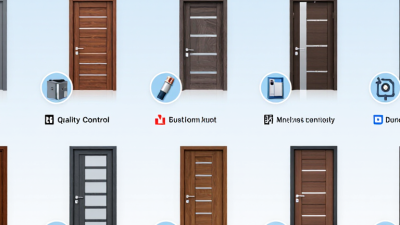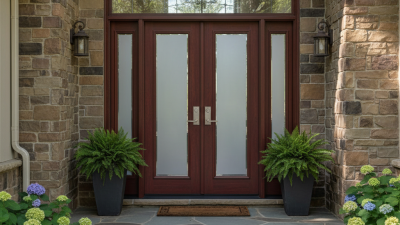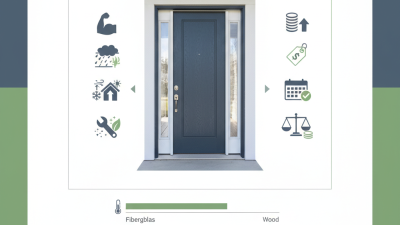





Choosing a fiberglass door is not just a style decision. It affects daily comfort, weather protection, maintenance, and the way an entry feels underhand. For buyers comparing manufacturers in China, the challenge is separating polished catalog images from measurable product details. Look closely at frame construction, skin thickness, core insulation, finish options, hardware preparation, and quality-control practices. Ask how samples are checked and how packaging protects corners during shipment. Small details matter.
Building-science expert Joseph Lstiburek is often associated with the warning, “Water is the enemy of buildings.” That principle matters when evaluating any exterior door, including fiberglass doors. A durable door still depends on sound sealing, careful installation, and a suitable finish. A strong product description cannot prove how a door performs after years of sun, rain, and repeated use. No shortcut here.
This guide introduces ten Chinese manufacturers for buyers seeking a practical starting point. It considers product range, customization, manufacturing capability, communication, and the information suppliers make available. Buyers should verify specifications directly and request current samples, test documents, and written warranty terms before placing an order. Those checks take time. They can also expose gaps that a showroom visit may miss. Rankings are useful, but they are not a substitute for matching a supplier’s capabilities to your project, climate, and delivery requirements. Even a careful comparison has limits: factory claims need independent confirmation, and one supplier may suit a large project but not a small renovation.
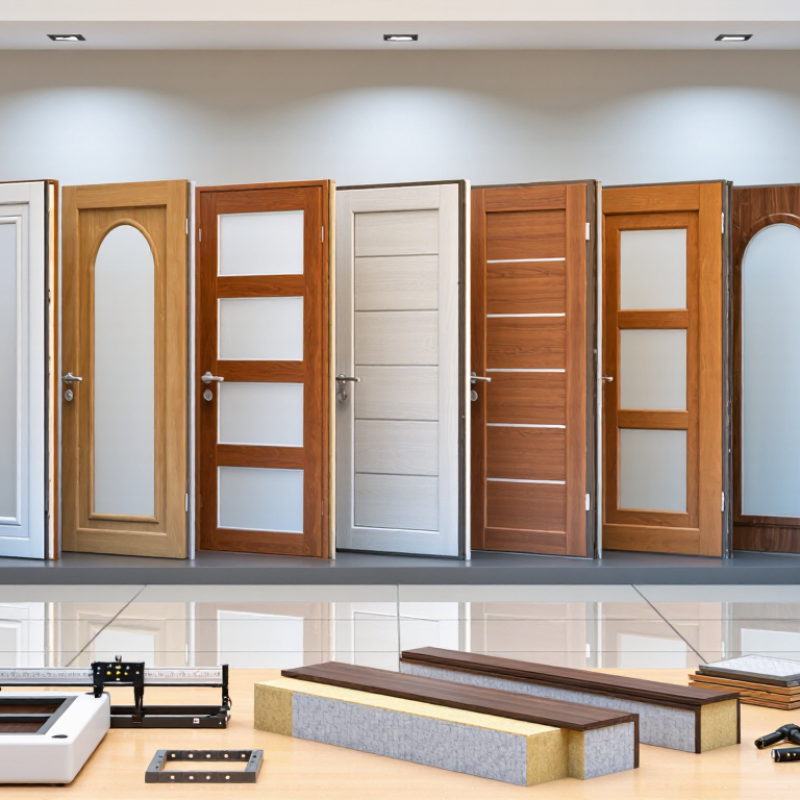
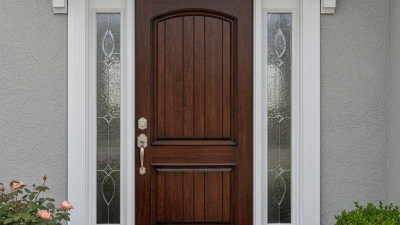
Fiberglass doors combine molded skins with an insulating core, often made from polyurethane foam. They resist moisture and do not need the frequent repainting that some wood doors require. Their surface can imitate wood grain, but close inspection may reveal a more uniform texture. The frame, weatherstripping, and installation matter as much as the door slab.
Common applications include main entrances, side entries, and rear doors exposed to rain or strong sunlight. The U.S. Energy Information Administration’s 2020 Residential Energy Consumption Survey reports that space heating accounts for about 42% of household energy use. This is not a door-performance figure, but it shows why a well-sealed building envelope matters. Fiberglass alone cannot prevent drafts if the frame is poorly fitted.
Tips: Check the door’s U-factor and air-leakage rating, where available, rather than relying on material claims. Inspect the threshold and weatherstripping, especially near the lower corners. For coastal or humid sites, ask about finish durability and hardware compatibility. A premium door can still disappoint when installation gaps are left untreated.
China’s fiberglass door manufacturing industry combines composite molding with established capabilities in hardware, glazing, and surface finishing. Production commonly involves shaping fiberglass skins, filling the core, and joining components under controlled conditions. The result can be a door designed for moisture resistance and relatively low maintenance.
Details matter.
Factories may offer different panel styles, sizes, colors, and frame options. Some support custom orders, while others focus on repeatable standard models. For buyers, this affects lead time, minimum order quantities, and replacement-part availability. A sample can reveal surface texture and color, but it cannot show every weakness. Check corners, seals, hinge preparation, and the consistency of several units.
Manufacturing capacity alone is not proof of dependable performance. Ask how suppliers inspect dimensions, finish quality, and door operation before packing. Request clear specifications for core materials, glazing, hardware, and packaging. Export experience can help with documentation and shipment coordination, though communication still needs careful review. A small wording difference may change what is included. Factory audits and third-party testing can provide useful evidence, but their scope should be confirmed. Even a polished sample may not match a full production run perfectly, so buyers should agree on tolerances and inspection criteria in writing.
When comparing manufacturers, look beyond a smooth surface sample. Check the door’s skin thickness, corner joints, foam core, and the seal around its edges. Ask for test reports covering air leakage, water penetration, and structural performance, such as ASTM E283, E331, and E330. Confirm that results apply to the same door design and size you plan to order. A polished sample can hide weak edge sealing; it is easy to overlook.
Tips: Request a labeled thermal-performance report. The U.S. Department of Energy says heat gain and loss through windows account for about 25–30% of residential heating and cooling energy use. This figure concerns windows, not every opaque door, but it shows why glazed inserts and their ratings deserve attention. For glazed products, check whether performance values are independently verified, such as through NFRC procedures.
Also assess factory consistency: ask how the manufacturer controls resin mixing, curing, and dimensional tolerances across production runs. Request recent inspection records, warranty terms, and packaging details, then inspect a finished unit for even gaps and secure hardware. Compare lead times against actual production capacity. A low quote may omit testing or protective packaging, so make every specification and included service explicit in the purchase agreement.
China’s fiberglass door manufacturers serve varied projects, from apartments to coastal homes. Their profiles are most useful when they show real production strengths, not broad claims. Some focus on molded door skins; others offer complete door sets with frames, seals, and hardware. A few handle custom dimensions, while larger operations may prioritize repeat orders. Details matter.
A buyer comparing ten manufacturers should examine how each builds and tests its doors. Ask about skin thickness, core material, edge sealing, and finish consistency. Request close-up photos of corners and sample doors in daylight. Check whether stated dimensions include the frame. A neat catalog is not proof. Factory records and clear inspection steps offer stronger evidence, though they still deserve review.
The profiles should also explain lead times, packaging, and communication practices. Export experience can help with labeling and shipping coordination, but it does not guarantee a smooth order. Ask how color variation, transit damage, or a delayed batch is handled. Small sample differences can become visible across a whole installation. That part is easy to overlook. A careful comparison may reveal that a modest supplier fits a project better than a larger one.
Buyer research table: supplier identities and company-specific capabilities are not provided or independently verified. Use each anonymous row as a due-diligence checklist; confirm all specifications and claims directly with the supplier.
| Anonymous Profile | Product Scope to Confirm | Construction Details to Request | Performance Evidence to Check | Customization Questions | Buyer Due-Diligence Step |
|---|---|---|---|---|---|
| Profile 01 | Residential entry doors | Ask for skin material, core type, slab thickness, and frame options. | Request test reports for the exact door configuration being quoted. | Confirm available sizes, handing, colors, glass, and hardware preparation. | Match the sample, drawings, and written specification to the purchase order. |
| Profile 02 | Wood-grain-finish doors | Ask how the surface texture and finish are produced and protected. | Request finish-care instructions and any applicable weathering test data. | Check finish samples, color consistency, and options for raised panels. | Approve a production sample and define acceptable color variation. |
| Profile 03 | Smooth-surface doors | Confirm face-sheet construction, edge treatment, and finishing process. | Request the applicable durability and environmental test documentation. | Confirm paint-ready or finished options and permitted custom dimensions. | Inspect edges, corners, and finish quality on a representative sample. |
| Profile 04 | Insulated door systems | Ask for core material, core density, and the complete slab build-up. | Request thermal-performance data for the tested assembly, if available. | Check glazing, weatherstripping, frame, and threshold compatibility. | Compare like-for-like test results; do not rely on core material alone. |
| Profile 05 | Glazed or decorative-glass doors | Confirm glass type, glazing method, glass dimensions, and retention details. | Request documentation for the specified glass and assembled door, where applicable. | Check glass patterns, privacy options, and limits on glazing placement. | Verify glass specifications and local code requirements for the destination market. |
| Profile 06 | Custom-size door orders | Request dimensional tolerances and installation-clearance requirements. | Ask whether test results cover the requested size and configuration. | Confirm maximum and minimum sizes, machining, and drawing approval steps. | Approve shop drawings before production and document measurement responsibility. |
| Profile 07 | Door-and-frame sets | Identify frame material, jamb dimensions, sill, seals, and supplied hardware. | Request performance reports for the complete set rather than the slab alone. | Confirm wall-thickness compatibility, hinge positions, and threshold options. | Check that the frame and door are designed to work together at installation. |
| Profile 08 | Doors intended for demanding weather exposure | Ask about finish, seals, drainage details, and recommended maintenance. | Request relevant water, air, and structural test reports for the quoted assembly. | Confirm available configurations for the project's exposure and installation conditions. | Check that the test standard and rating are accepted in the destination market. |
| Profile 09 | Doors requiring fire or impact performance | Request the exact rated assembly, including frame, glazing, seals, and hardware. | Verify current certificates and test reports from an appropriate recognized body. | Confirm that requested modifications are allowed within the certified configuration. | Do not treat a general product claim as proof of a fire or impact rating. |
| Profile 10 | Export-oriented supply orders | Confirm packaging, moisture protection, labeling, and container-loading plan. | Request traceable quality-control records and inspection criteria for the order. | Agree on incoterms, lead time, spare parts, and destination-market documentation. | Verify production capacity, payment terms, inspection access, and warranty terms in writing. |
When comparing China’s fiberglass door manufacturers, look beyond a broad catalog. Check whether each supplier offers the sizes, panel styles, glazing options, and frame configurations your project needs. Ask for clear specifications on skin thickness, core material, weatherstripping, and hardware preparation. A detailed product range matters only when the options are available at consistent quality.
Request samples or recent production photos, along with relevant test reports and written inspection criteria. Check the surface finish, corner alignment, and fit of the weather seals; small flaws can become costly across a large order. Compare how suppliers handle color matching and custom dimensions. Paperwork helps, but it cannot show every production variation. This is not foolproof.
Export support deserves equal attention. Confirm lead times, packing methods, pallet details, and which shipping documents the supplier can provide. Ask how damage claims and replacement parts are handled, and make sure answers are specific rather than generic. For an initial order, a trial shipment can reveal communication gaps before they affect a full container. There may be trade-offs: a wider range can mean longer lead times, while simpler specifications may be easier to inspect. Buyers should record these differences instead of relying on a ranked list alone.