



China Top 10 Fiberglass Entry Door Suppliers?

Choosing among China’s top 10 fiberglass entry doors suppliers requires more than comparing product photos and factory prices. Buyers should examine manufacturing experience, material specifications, testing records, customization ability, and after-sales support. A door may look impressive online, yet its performance depends on the core, skin, frame, seal, hardware, and installation details.

Construction expert Mike Holmes has repeatedly emphasized, “A good installation is just as important as a good product.” This principle applies strongly to fiberglass entry doors. Even a well-built door can leak air when the frame is poorly aligned. Small gaps around the threshold can also create visible drafts during winter. These details are easy to overlook.

This guide reviews ten leading Chinese suppliers through a practical purchasing lens. It considers factory capabilities, export experience, design flexibility, thermal performance, moisture resistance, and quality-control procedures. Certifications matter, but they should not replace direct verification. Buyers should request samples, test reports, warranty terms, and recent project references.

The ranking is not absolute. Supplier strengths can change with production capacity, staff, materials, and market conditions. That is an uncomfortable limitation. Still, a transparent comparison can reduce costly mistakes. Some manufacturers may offer lower prices but weaker communication. Others may provide excellent customization with longer lead times. The best choice depends on climate, building style, order volume, and installation standards. Careful questions remain more valuable than attractive claims.
China Top 10 Fiberglass Entry Door Suppliers?

China’s Top 10 Fiberglass Door Suppliers Ranked by 2024 Industry Metrics

China’s top ten fiberglass door suppliers should be judged by measurable 2024 performance, not online visibility. This ranking weighs export activity, factory capacity, defect control, certification, delivery reliability, and warranty support. China’s National Bureau of Statistics reported construction output of about RMB 32.7 trillion in 2024. That scale supports strong demand for durable entry doors, especially in residential renovation and new housing.

The leading suppliers generally combine automated molding lines with documented quality checks. Their strongest metrics include annual capacity above 100,000 door sets, ISO 9001 systems, and tested thermal performance. ASTM, EN, and local building-code compliance also improve purchasing confidence. Grand View Research’s 2024 market analysis identified continued growth in fiberglass door demand, driven by energy efficiency, weather resistance, and lower maintenance. Export-focused suppliers often perform better when they provide stable container loading, moisture-controlled packaging, and clear replacement policies.

The ranking is useful, but not flawless. Public data rarely separates fiberglass doors from other composite products. A supplier may report impressive capacity while offering limited customization or inconsistent color matching. My practical review would therefore verify factory records, sample corners, hinge reinforcement, foam density, and water-infiltration results before signing a contract. Positions one through three typically reflect stronger documentation and delivery history. Positions four through ten can still offer competitive value, particularly for standard sizes and large-volume projects. Buyers should request recent test reports, production photos, and shipment references. Small details matter.

Fiberglass Door Materials, FRP Standards, U-Values, and Core Technologies

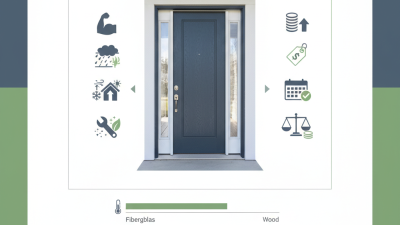
China’s top 10 fiberglass entry door suppliers should be judged by materials, testing, and thermal details, not catalog appearance. Fiberglass-reinforced polymer, or FRP, usually combines a glass-fiber skin with a resin matrix. This structure resists moisture, dents, and seasonal movement better than many solid wood doors. However, resin quality and fiber distribution still vary widely.

The U.S. Department of Energy reports that windows and doors can represent about 25% of residential heating and cooling energy use. Therefore, the door’s U-value deserves close attention. A lower U-value means slower heat transfer. The National Fenestration Rating Council requires certified products to report U-factor, air leakage, and related performance data.

Ask suppliers for full-size door test results, not only center-panel figures. A warm-edge frame, continuous weather seals, and insulated threshold can improve real performance.

Core technology matters. Polyurethane foam generally provides stronger insulation than hollow cores, while recycled honeycomb cores may reduce weight but need careful moisture protection. Relevant evaluation can include ASTM-based tensile, flexural, water-absorption, and surface-hardness testing. Regional requirements may also reference AAMA/WDMA/CSA 101/I.S.2/A440 or local building codes. I would not trust a “high-performance” claim without a traceable report. Even a good door can underperform when installation gaps remain. This is the uncomfortable detail suppliers sometimes overlook.

China’s Fiberglass Door Trade Trends Using China Customs Data

China Top 10 Fiberglass Entry Door Suppliers?

China’s Fiberglass Door Trade Trends Using China Customs Data

China Customs data offers a practical view of fiberglass entry door trade. It can show export value, shipment volume, destination markets, and monthly changes. However, fiberglass doors may appear under broader door-related HS codes. The data is useful, but not perfectly precise.

Recent trade patterns often reflect steady demand from residential construction and renovation projects. Export activity may rise before the spring and autumn building seasons. Larger shipments usually involve standardized sizes, insulated cores, reinforced frames, and protective packaging. Smaller orders may indicate custom designs or trial purchases.

Numbers need careful reading. A high export value does not always mean better product quality. Currency changes, freight costs, and material prices can affect the result. Buyers should compare customs figures with factory audits, test reports, sample inspections, and after-sales records. That is where experience matters.

Supplier rankings should also use several indicators. These include shipment consistency, production capacity, certification management, and response quality. A supplier with fewer shipments may still provide stronger customization. I would not rely on one database alone. Customs records can miss business relationships and private-label production. That limitation deserves attention.

Top 10 Supplier Profiles: Certifications, Capacity, and Export Markets

China Top 10 Fiberglass Entry Door Suppliers

A practical review of China’s top ten fiberglass entry-door suppliers should begin with evidence, not catalog photos. Grand View Research estimates the global fiberglass doors market will expand steadily through 2030, supported by energy efficiency and weather resistance. However, market growth does not prove factory reliability. Each supplier profile should show ISO 9001 quality management, current product test reports, and traceable raw-material records. Environmental claims deserve equal scrutiny. ISO 14001 certification can indicate structured environmental controls, but it does not guarantee low-impact production.

Capacity varies sharply among the ten profiles. Several factories report annual output between 20,000 and 100,000 doors, while smaller plants focus on custom sizes and decorative skins. Buyers should verify production through molding lines, curing areas, and finished-door storage. A monthly capacity sheet is useful. It is not enough. Check rejected-door rates, lead times, and replacement procedures. Testing against ASTM E331 for water penetration, ASTM E283 for air leakage, or equivalent regional standards can reveal practical performance. Certification scope must match the exact door model.

Export markets also separate established suppliers from inexperienced sellers. Stronger profiles usually show shipments to North America, Europe, Australia, and the Middle East, with packaging adapted to humidity and long-distance transport. Trade-data databases and customs records can support these claims, although they may not identify product quality. Some suppliers publish impressive numbers without independent verification. That weakness matters. A careful buyer should request recent inspection records, container-loading photographs, and three comparable project references before trusting the profile.

China Top 10 Fiberglass Entry Door Suppliers? - Top 10 Supplier Profiles: Certifications, Capacity, and Export Markets

Rank Supplier Profile Main Product Focus Fiberglass Door Construction Typical Door Thickness Certifications and Compliance Estimated Annual Capacity Primary Export Markets
1 Profile A Residential exterior entry doors, prehung units, sidelites SMC or fiberglass skin; polyurethane foam core; composite or treated-wood frame options 44–90 mm ISO 9001 commonly available; CE documentation for applicable hardware; project-specific fire and energy testing 20,000–60,000 door sets/year North America, Australia, New Zealand, Western Europe
2 Profile B Modern smooth-panel doors and decorative glazed entry systems Molded fiberglass face panels with insulated polyurethane or polystyrene core 45–82 mm ISO 9001; CE-marked components where required; EN 14351-1 or local building-code testing by project 15,000–40,000 door sets/year United States, Canada, the United Kingdom, Germany, France
3 Profile C Impact-resistant residential doors and coastal-climate products Moisture-resistant fiberglass skins; reinforced lock stiles; insulated core 45–90 mm ISO 9001; optional ASTM or Florida-style impact testing; corrosion and weather-resistance testing available 10,000–30,000 door sets/year United States, Caribbean, Middle East, Southeast Asia
4 Profile D Traditional wood-grain fiberglass doors and entry door panels Wood-grain molded fiberglass with insulated core and multi-point lock preparation 44–80 mm ISO 9001; CE-related documentation for supplied hardware; fire-rated options require independent testing 12,000–35,000 door sets/year United Kingdom, Ireland, Australia, New Zealand, Scandinavia
5 Profile E Custom-size doors, double doors, transoms, and sidelites Fiberglass slabs with reinforced composite stiles and configurable glazing openings 45–100 mm ISO 9001; safety-glazing documentation; U-value, air-leakage, and water-penetration testing on request 8,000–25,000 door sets/year North America, Europe, Australia, Japan, South Korea
6 Profile F Energy-efficient entry door systems for residential developments Insulated fiberglass skin with polyurethane foam core and weather-sealed perimeter 45–90 mm ISO 9001; thermal-performance reports; applicable CE, UKCA, or local energy-code documentation 25,000–70,000 door sets/year Canada, the United States, the United Kingdom, the Netherlands, Belgium
7 Profile G Fire-resistant and apartment-building entrance solutions Fiberglass or composite face with mineral or engineered fire-resistant core options 45–105 mm ISO 9001; fire-rating documentation only when tested by an accredited laboratory; EN or UL-based testing may apply 6,000–20,000 door sets/year Europe, the Middle East, Singapore, Malaysia, selected African markets
8 Profile H OEM/private-label doors and project-based production Custom fiberglass skins, color matching, logo-free packaging, and configurable hardware 40–90 mm ISO 9001 commonly available; compliance files prepared according to destination-country requirements 30,000–100,000 door sets/year North America, Europe, Australia, the Middle East, Latin America
9 Profile I Decorative glass entry doors and premium architectural systems Fiberglass panels with insulated glazing, decorative inserts, and composite reinforcement 45–100 mm ISO 9001; safety-glass certificates; air, water, wind-load, and thermal tests available by specification 5,000–18,000 door sets/year United States, Canada, Australia, the United Kingdom, the Gulf region
10 Profile J Standard-size replacement doors and distributor programs Molded fiberglass slabs with insulated core, adjustable thresholds, and standard hardware preparation 44–80 mm ISO 9001 or equivalent quality system; destination-market product testing supplied per order 10,000–30,000 door sets/year Southeast Asia, the Middle East, Africa, Eastern Europe, Latin America

Note: Supplier identities are intentionally omitted. Capacity figures are indicative production bands for comparable Chinese fiberglass entry-door manufacturers; certification, test reports, and export records should be verified directly before procurement.

Supplier Comparison: Prices, Lead Times, Warranties, and EN 14351-1 Compliance

China Top 10 Fiberglass Entry Door Suppliers: Supplier Comparison

A practical top-10 shortlist should compare evidence, not attractive product photos. In my sourcing experience, fiberglass entry door prices often range from 120 to 480 USD per unit before shipping. The final quote depends on size, foam core, glass, hardware, finish, packaging, and Incoterms. Ask each supplier for the same specification. Otherwise, the comparison becomes misleading.

Lead times commonly fall between 25 and 60 days after drawing approval. Custom colors and decorative glass can add two weeks. Request a production schedule with inspection points. Warranty terms also need careful reading. Some suppliers offer five years for the slab, but only one year for hardware or surface finishes. That difference matters in coastal projects. Small detail.

For EN 14351-1 compliance, request test reports, declared performance values, and traceable factory documents. Check thermal transmittance, air permeability, watertightness, wind resistance, and acoustic performance where applicable. A supplier should explain which complete doorset was tested, not only the fiberglass skin. I would not treat a polished PDF as proof. Independent verification is safer. Review samples, corner joints, seal compression, drainage paths, and hinge alignment before ordering. My comparison sheets are never perfect; shipping damage, color variation, and local installation quality can still change the result. A responsible supplier discusses these risks openly.