



What Are the Best Steel Front Doors in 2026?

Steel front doors promise a reassuring combination: a firm latch, a solid feel, and a cleaner entrance. But which models deserve attention in 2026? The answer depends on more than the steel skin. Core material, frame fit, weatherstripping, finish, and installation all shape comfort and durability. A beautiful slab can still disappoint if cold air slips around its edges.

One useful financial reference is Remodeling magazine’s 2025 Cost vs. Value report. It estimates a U.S. steel entry-door replacement at $2,435, with $5,270 in resale value recovered, or 216.4% of the project cost. That is a national remodeling benchmark, not a guarantee or a product-performance test. Building-science expert Joseph Lstiburek describes the building enclosure as “the physical separator between the interior and exterior environments of a building.” A front door is one part of that boundary; its installation matters as much as its label.

Looks matter. So does fit.

This guide compares steel front doors by security features, energy details, finish options, maintenance, and value. We will also separate manufacturer claims from verifiable specifications, including tested ratings where available. One honest caveat: ratings and prices can vary by model, region, and installer, so a “best” door on paper may not be best for your opening. Expect practical trade-offs, not a perfect winner.
What Are the Best Steel Front Doors in 2026?

What Defines a Steel Front Door in 2026?

In 2026, a steel front door is more than a sheet of metal. Most models pair steel skins with an insulated core, commonly polyurethane or polystyrene. The frame, threshold, weather seals, and installation also shape comfort and performance. A sturdy door can still leak air around its edges.

Look beyond appearance. The National Fenestration Rating Council label reports a door’s U-factor, which indicates heat transfer; lower values mean less heat passes through. The U.S. Department of Energy notes that windows account for 25%–30% of residential heating and cooling energy use. That figure is not a door estimate, but it shows why openings deserve careful attention. The North American Fenestration Standard evaluates products for air leakage, water penetration, and structural performance.

Touch the inside surface on a cold morning. A chilly frame or draft near the latch may reveal more than a showroom display. Check that the door closes evenly and seals against the threshold. Details matter. Still, a label cannot assess poor installation, and steel thickness alone does not define quality. That part is easy to overlook.

Which Factors Determine Door Quality and Performance?

Steel front-door quality starts with the complete assembly, not the sheet-metal skin. Check the core, frame, threshold, seals, hinges, and lock reinforcement together. A dense insulated core can slow heat transfer, while a continuous thermal break limits cold spots around the frame. Tight weatherstripping should compress evenly; inspect the lower corners, where small gaps often admit drafts and rain. Small gaps matter.

The U.S. Energy Information Administration’s 2020 Residential Energy Consumption Survey reports that space heating accounts for about 42% of household energy use. That figure makes insulation and air leakage relevant, though it does not predict savings from one door. Compare NFRC-certified U-factor ratings; lower values indicate less heat transfer. For tested air, water, and structural performance, look for documentation tied to the AAMA/WDMA/CSA 101/I.S.2/A440 standard. Ask for the actual rating, not just a claim of “weather-resistant.”

Durability depends on details that are easy to overlook. Inspect the finish for complete coverage at edges and cutouts, and confirm the sill sheds water away from the home. A thicker steel face may resist dents, but thickness alone says little about the frame or installation. Looks can mislead. Even a well-rated door can underperform if the jamb is out of square or the perimeter seal is poorly fitted.

What Types of Steel Front Doors Are Available?

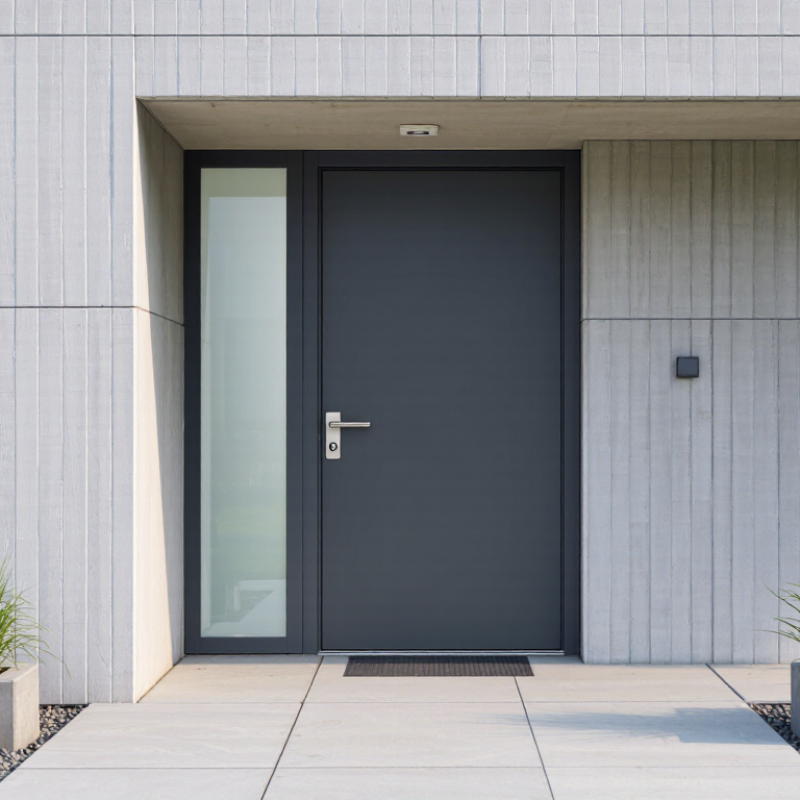
Steel front doors come in several practical styles, and the right choice depends on climate, privacy, and the look of your entry. Flush doors have a smooth face and suit clean, modern exteriors. Raised-panel designs add familiar detail without using wood. Both can be painted, though the finish needs care where rain or sun repeatedly hits the door.

Some steel doors include decorative glass, from a small narrow lite to larger patterned panels. Glass brings daylight into a dim foyer, but it can reduce privacy and may affect insulation. Insulated models use a foam-filled core to limit heat transfer; ask for the door’s performance details rather than judging by its steel skin alone. Reinforced frames and multi-point locks are also available, but installation matters. Even a solid door can feel less secure if its frame is poorly anchored.

Tips: Check the full door system, including frame, threshold, and weatherstripping. Look for a smooth, even finish and inspect edges for chips before installation. In damp or coastal settings, confirm the coating is suitable for local conditions. A glass-heavy design may look inviting, yet prove too exposed at night; consider that trade-off before choosing.

What Are the Best Steel Front Doors in 2026? — What Types of Steel Front Doors Are Available?

Door Type Typical Construction Main Advantages Considerations Best Suited For
Insulated steel entry door Steel skins over a core that is commonly filled with polyurethane or polystyrene foam. Offers a balance of strength and thermal performance; the insulated core can reduce heat transfer compared with an uninsulated door. Performance depends on the complete door assembly, including the frame, weatherstripping, glazing, and installation. Homes where energy efficiency and everyday durability are priorities.
Flush steel door A smooth, flat steel door face, available in insulated and non-insulated versions. Simple, understated appearance; a smooth surface is generally straightforward to clean and repaint. May have fewer decorative details than molded or glazed styles; check the core and finish specifications. Modern or minimalist entrances and projects seeking a clean, plain design.
Embossed-panel steel door Steel faces pressed into raised or recessed panel patterns, often with an insulated core. Provides a traditional paneled appearance without using a solid-wood door slab. Panel profiles and finishes vary; inspect the coating and confirm that the door is rated for exterior use. Traditional, transitional, or colonial-style home entrances.
Steel door with glazing A steel door slab containing one or more glass lites; glazing may be clear, textured, or decorative. Brings daylight into an entry and offers a wide range of visual styles. Glass affects privacy and thermal performance. Look for suitable safety glazing and energy-performance information for the intended location. Entrances where natural light or visibility is important.
Steel door with sidelites or a transom A steel door paired with fixed glazed panels beside the door, above it, or both. Creates a wider, brighter entry while retaining a steel door slab. More glazed area can increase heat transfer and reduce privacy; the surrounding frame and seals are important to overall performance. Porches or entryways with enough wall space for a larger door assembly.
Double steel entry doors Two door leaves fitted in one frame, typically with one active leaf and one secured inactive leaf. Provides a broad opening for moving large items and creates a prominent entrance. Requires more wall space and careful alignment, weather sealing, and hardware coordination than a single door. Wide entrances where a single door would not provide the desired opening.
Fire-rated steel door assembly A door, frame, hardware, and seals designed and labeled to meet a specified fire-resistance rating. Can help meet fire-safety requirements when used in an opening that requires a rated assembly. Not every steel front door is fire-rated. The rating applies to the compatible assembly and must match applicable building codes and installation requirements. Code-required openings, such as certain connections between a house and an attached garage; confirm local requirements.

Selection note: Compare complete door assemblies rather than steel thickness alone. Check exterior-use suitability, insulation details, weather seals, finish durability, glazing specifications, hardware compatibility, and local code requirements.

How Do Leading Steel Door Options Compare?

Steel front doors are best compared by their construction, not appearance alone. Many use steel skins over an insulated core, but skin thickness and core quality vary. A thicker skin can resist everyday dents better, though it may add weight. Check the door’s full assembly, including its frame and hinges.

Insulated models can help limit drafts when the frame is fitted squarely and weatherstripping seals evenly. Feel for gaps around the jamb on a windy day. That matters. A door with decorative glass brings daylight into a dim entry, but larger glass areas can reduce privacy and change the door’s insulation performance. Ask what type of glazing is used and how it is secured.

Finishes also separate options. Smooth painted steel is easy to clean, while textured or wood-grain finishes can hide small marks; neither makes a door immune to scratches. In damp or coastal settings, inspect coating coverage at edges and bottom corners, where moisture may linger. I would not rank a door by its security claims alone. Lock hardware, reinforced strike areas, installation, and the surrounding wall all affect real-world performance. It is easy to overlook the frame. A well-made slab can still feel disappointing if the threshold leaks or the hinges are poorly aligned.

How to Choose the Best Steel Front Door for Your Home?

Choosing a steel front door starts with the opening, not the finish. Measure width, height, jamb depth, and sill. An attractive slab cannot fix a frame that leaks air. Ask for an insulated core, continuous weatherstripping, and a thermally broken frame where available. Check the NFRC label for U-factor and solar heat gain coefficient, comparing doors of similar size and glazing. Lower U-factor means less heat transfer. Fit matters.

Steel thickness alone does not establish security. Inspect reinforced lock areas and hinge screws long enough to reach the framing. Consider a multipoint lock if it suits your home. A small glass panel can brighten a dark entry, but may reduce privacy and affect hardware placement. Before ordering, check door swing, threshold height, and exposure to rain or salty air. Coatings and upkeep vary.

Zonda’s 2024 Cost vs. Value report estimated a national average steel entry-door replacement cost of $2,355. Its estimated resale value was $4,430, equal to 188.1% cost recouped. This is a resale estimate, not a promise of profit; local markets and installation affect results. Treat it as context, not a buying rule. Installation is easy to underestimate. A correctly fitted door may matter more day to day than a premium finish.

Choosing a Steel Front Door: Common U.S. Nominal Widths

Common nominal widths for single residential entry doors; 80 inches is a common standard height.

Before choosing a steel door, measure the existing slab and frame, including its height, width, and thickness. Nominal sizes may differ from actual measurements, so confirm the manufacturer’s specifications and check whether the frame or rough opening also needs replacement.