




China’s aluminum doors market serves homes, offices, hotels, and industrial projects. Buyers can choose from sliding, swing, folding, and thermal-break designs. Yet a polished catalog does not prove dependable performance. Frame thickness, alloy grade, coating quality, hardware, and installation details all deserve careful review. A door should move smoothly, seal evenly, and withstand the conditions around the building. Small details matter. A poorly aligned track can spoil an otherwise attractive entrance.
Architect Ludwig Mies van der Rohe’s famous phrase, “Less is more,” offers a useful design lens. It is not a technical rule for aluminum doors. Still, it reminds buyers that slim profiles must balance appearance with strength and function. This guide introduces leading manufacturers and suppliers in China, along with practical points for comparing their products. Look beyond showroom photos. Ask about test reports, finish samples, customization limits, lead times, packaging, and after-sales support. Confirm specifications in writing. A supplier may offer an impressive range, but not every model suits every climate or building. No shortlist is perfect; overlooked details can change the result. That is worth admitting. Use the comparisons here as a starting point, then verify claims directly with each manufacturer before making a decision.
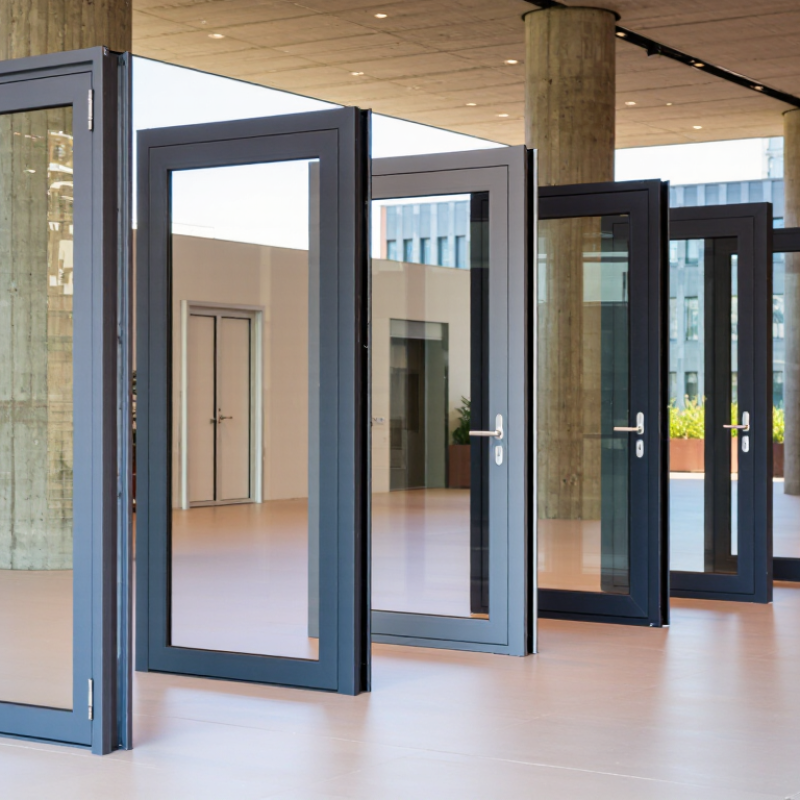
China’s aluminum door manufacturing industry combines metal processing, surface finishing, glazing, and assembly within a broad supplier network. Many factories can produce sliding, casement, and folding systems in standard or project-specific dimensions. The work often begins with aluminum profiles cut to length, then moves through machining, corner joining, hardware fitting, and inspection. Small tolerances matter. A few millimeters can affect how a heavy door closes.
Manufacturers may offer thermal-break frames, powder-coated finishes, and different glass configurations. These options help buyers match doors to climate, building design, and maintenance needs. Yet product descriptions alone rarely show how a system performs. Ask for profile drawings, hardware specifications, finish samples, and test reports where available. Check whether the stated measurements apply to the complete door or only one component. That distinction is easy to miss.
Production capacity varies widely, from custom workshops to larger export-oriented facilities. Some suppliers coordinate extrusion, glazing, and packaging; others rely on partner factories. Buyers should clarify who handles quality checks and how damage claims are documented. Sample units can reveal rough edges, uneven coating, or stiff locks before a larger order is made. Honestly, no checklist removes every risk. Shipping conditions and installation quality still influence the final result.
Aluminum doors made in China cover several practical formats, each suited to a different opening and daily use. Hinged doors swing inward or outward and are common for entryways, balconies, and utility rooms. Their frames can use thermal-break profiles, which place an insulating barrier between inner and outer aluminum sections. Check the stated profile depth, gasket arrangement, and glass specification; these details affect comfort more than appearance alone. Small details matter.
Sliding doors move along tracks, making them useful where a swinging panel would take up floor space. They often suit patios and wide apartment openings. Ask about drainage paths and track cleaning, since dust and standing water can affect operation over time.
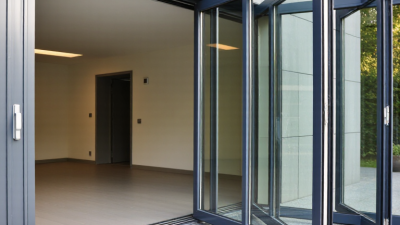
Folding or bi-fold doors stack panels to one side and can create a broad opening, but their hinges and rollers need accurate adjustment. Not every opening needs this system.
For commercial projects, aluminum-framed entrance doors may include large glass panels, reinforced corners, and hardware designed for door closers. Some suppliers also make louvered doors for ventilation or service areas.
Compare drawings, finish samples, glass thickness, and installation tolerances before ordering. Specifications can sound clear, yet one measurement may still be interpreted differently. A site check helps resolve that uncertainty.
Good selection depends on climate, opening size, traffic, and maintenance plans, not just the door’s style.
Chinese manufacturers begin with the opening, climate, and building use. A coastal apartment needs different detailing from a dry inland office. Engineers specify frame depth, drainage paths, seals, and glass before extrusion tooling is finalized. Small choices matter. A blocked weep hole can leave rainwater sitting inside the frame.
Aluminum billets are heated and pushed through dies to form profiles. Factories then cut, machine, join, and finish the pieces, checking corner alignment and coating coverage along the way. The International Aluminium Institute reports that recycling aluminum requires about 5% of the energy used to produce primary aluminum. That makes recycled-content sourcing relevant, but traceability and alloy consistency still need attention. Scrap is not automatically suitable for every profile.
For better thermal performance, designers combine insulated glass with thermal breaks: low-conductivity strips separating interior and exterior aluminum. Manufacturers test air leakage, water penetration, and wind resistance against project requirements. Results depend on the full assembly, not one impressive component. A design can look precise on paper and still underperform after rushed installation. That part is easy to underestimate.
China’s aluminum door manufacturers often build their expertise around distinct project needs. Some focus on thermal-break entrance doors, using insulated frames and multi-point locks for homes exposed to cold winters. Others specialize in slim-frame sliding systems, where larger glass panels help connect living rooms with patios. The specialty matters. A door designed for a quiet apartment entrance may not suit a busy hotel corridor.
Manufacturers serving commercial projects may offer reinforced frames, heavier hinges, and finishes tested for frequent handling. For coastal buildings, buyers should ask about coating processes and maintenance requirements, since salty air can wear finishes faster. Details matter. A sample corner joint can reveal more than a polished brochure. Check drainage paths, gasket contact, and how smoothly the handle operates.
Some suppliers also provide custom sizes, color matching, and installation guidance. These services can reduce coordination problems, but they should be confirmed in drawings and written specifications. Still, catalog claims can look cleaner than real site conditions. Ask for product data, test reports relevant to the project, and examples of comparable installations. Small details count. A modest gap at the threshold can affect sealing, accessibility, and everyday comfort.
Aluminum door manufacturers commonly use 6063 alloy extrusions for frame and sash profiles. This chart compares the specified minimum tensile and yield strengths for 6063-T5 and 6063-T6 extrusions; actual properties depend on product dimensions and the applicable standard.
Reference: ASTM B221 minimum mechanical-property values for 6063 extrusions.
When evaluating aluminum doors from China, compare the complete assembly, not just the frame price. Ask for alloy and temper, profile-wall thickness, thermal-break material, glazing build-up, hardware grade, and finish specification. Request drawings with section details and tolerances. A sample corner cut can reveal weak joints or uneven seals. Small details matter.
Thermal performance needs documented evidence. The IEA’s 2023 buildings-sector tracking reports that buildings account for about 30% of global final energy use and 26% of energy-related emissions. Ask for whole-door U-values and air-leakage and water-penetration test reports. Check the test standard, sample size, and configuration. A result for a small window does not prove performance for a large sliding door. Verify report numbers and dates with the testing laboratory. No shortcuts here.
Assess production controls, not polished showroom displays. Review incoming material records, coating-thickness checks, glass traceability, and inspection records linked to your order. Confirm packaging, spare hardware, lead times, and replacement-part terms. Arrange pre-shipment inspection against an approved sample and written checklist. One common sourcing mistake is accepting vague “customs included” pricing. Request named Incoterms, the shipment port, and an itemized quote. Paperwork can still be messy, so clarify every exception before paying a deposit.