What Types of Aluminum Doors Are Best for Your Project?

Choosing aluminum doors is not simply a matter of selecting the brightest finish or lowest price. Your project may need thermal efficiency, storm resistance, accessibility, security, or generous natural light. Each requirement changes the best door system.

Building-science expert Dr. Joseph Lstiburek often stresses that “water is the most important thing to control in a building.” That principle applies directly to aluminum doors. A poorly detailed threshold can allow rainwater into flooring, insulation, and wall cavities. Look closely at drainage paths, weather seals, sill height, and installation quality. Small details matter.

This guide compares the main types of aluminum doors, including sliding, hinged, folding, pivot, and thermally broken systems. It considers where each option performs well. It also examines limitations that product brochures may overlook. A large sliding door can create an impressive opening, yet its rollers and tracks require regular cleaning. Folding doors provide wide access, but their hardware can demand more adjustment. Thermally broken aluminum doors reduce heat transfer, although they often cost more upfront.

There is no universal winner. That is easy to forget. A coastal home, retail entrance, office renovation, and warehouse need different solutions. Project exposure, traffic levels, glass size, local climate, and maintenance capacity should guide the decision. Even experienced teams can misjudge these factors when appearance dominates the discussion.

The sections ahead will help you compare performance, materials, configurations, and long-term value. The goal is not to promote one product. It is to help you choose aluminum doors that remain practical after installation day.

What Types of Aluminum Doors Are Best for Your Project?

Main Types of Aluminum Doors and Their Core Features

Aluminum doors suit projects where strength, slim frames, and manageable upkeep matter. Sliding doors move along tracks, making them useful beside patios or narrow walkways. Their broad glass panels bring in daylight without needing swing clearance. Tracks do collect grit, though, so they need regular cleaning to slide smoothly.

Hinged aluminum doors open inward or outward and work well for entrances, utility rooms, and smaller openings. They offer a familiar feel and can be fitted with single or paired panels. Check the surrounding space before choosing a swing direction. A door that looks elegant on a plan may block furniture in a real room. Small detail, big difference.

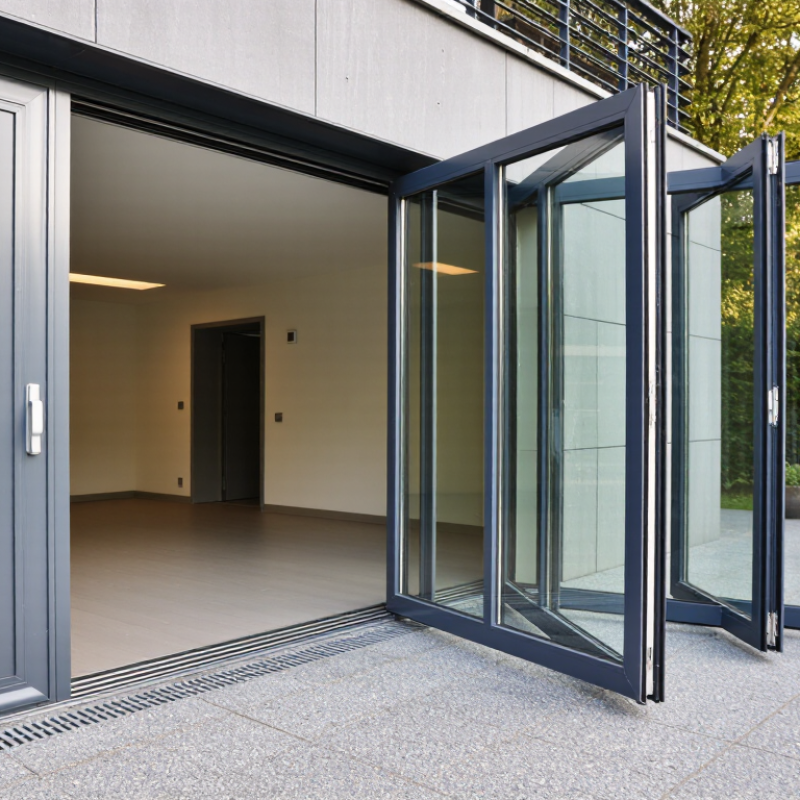
Folding doors stack panels to one or both sides, creating a wide opening between indoor and outdoor areas. They are often chosen for entertaining spaces, but their multiple hinges and tracks need careful installation and adjustment. Pivot doors rotate on hardware set away from the frame edge. They can make a striking entrance, yet require enough room to turn and precise hardware support. Measure twice. Aluminum finishes and thermal breaks also affect performance, so compare these details with the project’s climate, opening size, and daily use. I would not choose by appearance alone; the best type depends on how people actually move through the space.

What Types of Aluminum Doors Are Best for Your Project?

Main types of aluminum doors compared by representative opening width and typical panel count.

Sliding and lift-and-slide doors are well suited to wide openings and strong indoor–outdoor connections. Folding doors can create the largest flexible openings, while hinged and entrance doors are typically preferred for compact spaces, frequent access, and straightforward installation. Values shown are indicative mid-range figures based on common residential and light-commercial aluminum door configurations.

How Aluminum Door Designs Differ in Operation and Construction

Aluminum doors differ less by appearance than by how they move and carry weight. Hinged doors swing from side-mounted hinges, so they need clear floor space and a sturdy frame connection. They suit entries where a simple, familiar operation matters. Check the opening direction against nearby walls, furniture, and wind exposure. A wide door can feel heavy if its hinges and hardware are poorly matched.

Sliding doors travel on top and bottom tracks, keeping the room clear of a swinging panel. Their rollers, track drainage, and weather seals affect everyday performance. Dirt in the lower track can make movement rough; it is a small detail, but easy to overlook. Folding doors use several connected panels that stack to one side. They can create a broad opening, though they need space for the stacked panels and careful adjustment to keep gaps even.

Construction matters too. Aluminum frames are often built with thermal breaks, which separate interior and exterior metal surfaces and help reduce heat transfer. Glazing thickness, frame depth, and locking points should suit the panel size and local conditions. Pivot doors rotate around floor- and head-mounted pivots, allowing a distinctive, wide panel, but their weight demands suitable structural support. A sleek profile is not enough. In practice, the best design depends on the opening, daily traffic, weather exposure, and installation quality; even a good door can disappoint when these are misjudged.

What Types of Aluminum Doors Are Best for Your Project? — How Aluminum Door Designs Differ in Operation and Construction

Door Type How It Operates Typical Construction Best Suited For Space Required Thermal Performance Weather-Sealing Potential Main Advantages Common Limitations
Hinged Aluminum Door One or more leaves swing inward or outward on hinges. Aluminum frame with a glazed, insulated, or solid infill panel; may use thermally broken profiles. Residential entrances, offices, apartment buildings, service rooms, and emergency exits. Requires clear swing space equal to the door leaf depth. High potential when equipped with insulated glass and thermally broken frames. High potential because compression seals can be used around the frame. Simple operation, strong security options, good sealing, and broad hardware compatibility. Needs unobstructed swing clearance; wide or heavy leaves require reinforced hinges and closers.
Sliding Aluminum Door One or more panels move horizontally along upper, lower, or concealed tracks. Framed glazed panels with rollers, tracks, interlocks, weather seals, and optional thermal breaks. Patios, balconies, retail fronts, interior room dividers, and areas where swing space is limited. Needs a side-by-side panel zone rather than a front swing zone. Medium to high, depending on frame design, glazing, and interlock quality. Medium; track and meeting-rail areas require careful detailing. Efficient use of floor area, wide glazed openings, and smooth access when correctly installed. Tracks need cleaning; rolling hardware can wear; standard sliding systems may seal less tightly than hinged doors.
Lift-and-Slide Door Turning the handle lifts the panel slightly from the track; the panel then rolls with reduced resistance. Heavy-duty aluminum panels with large rollers, robust tracks, interlocks, and commonly thermally broken frames. Large residential openings, luxury terraces, commercial spaces, and high-performance glazed façades. Requires a parallel panel zone; the operating panel may be large and heavy. High potential with insulated glazing and thermally improved frame systems. High potential when the panel is lowered into compression seals after closing. Supports large panels, smooth operation, broad views, and improved closure pressure compared with basic sliders. Higher cost, heavier components, more complex installation, and greater structural requirements.
Bi-Fold or Folding Door Two or more hinged panels fold and stack to one or both sides of the opening. Linked aluminum panels with hinges, rollers, top or bottom guides, seals, and optional thermal breaks. Wide openings, garden rooms, restaurants, cafés, event spaces, and flexible indoor-outdoor connections. Needs a shallow stacking zone at the side or both sides of the opening. Medium to high; performance depends on the number of panel joints and seal design. Medium; multiple joints create more areas that require precise adjustment. Creates a very wide clear opening and allows most panels to be moved out of the opening. More hardware and seals than simpler doors; threshold alignment and panel adjustment are important.
Pivot Aluminum Door Rotates around concealed or surface-mounted pivot points positioned near the edge or farther into the panel. Large aluminum-framed or panel-faced leaf with a reinforced pivot box, concealed closer, and specialized hardware. Contemporary entrances, hotel lobbies, public buildings, and statement residential doors. Requires a swing arc on both sides or on the selected side of the pivot. Medium to high, depending on seals, panel thickness, and thermal-break design. Medium; sealing can be more complex than with a conventional hinged leaf. Handles large and heavy leaves, offers distinctive design flexibility, and can create a wide clear passage. Requires accurate structural coordination; the swing path may reduce usable floor area.
Aluminum Storefront Entrance Usually operates as a single or pair of hinged leaves within a lightweight storefront framing system. Aluminum framing with tempered or laminated safety glass, door rails, closer, lock, and commercial hardware. Retail shops, offices, clinics, schools, and other high-traffic commercial entrances. Typically requires a conventional swing area unless an automatic operator is used. Low to medium in standard systems; improved versions may include thermal breaks and insulated glazing. Medium; depends on thresholds, seals, door bottom details, and installation quality. Cost-effective, easy to configure with sidelites and transoms, and suitable for frequent public use. Standard systems may provide less insulation and acoustic performance than specialized entrance systems.
Automatic Aluminum Door Opens through a sensor, push button, access-control signal, or other activation device; may be sliding or swinging. Aluminum-framed door integrated with an operator, safety sensors, controls, and access hardware. Healthcare facilities, airports, offices, retail entrances, and accessible public routes. Depends on the operator type; sliding versions need a side pocket, while swing versions need an arc. Medium to high when paired with a thermally improved door system. Medium; frequent opening cycles can affect air infiltration and energy use. Improves accessibility, traffic flow, hygiene, and hands-free entry. Needs power, routine maintenance, safety testing, and coordinated control-system installation.

Performance ratings are comparative guidance. Actual thermal, air, water, acoustic, and structural results depend on the complete door assembly, glazing, hardware, threshold, installation, and applicable building-code requirements.

Project Requirements That Shape the Choice of Door Type

What Types of Aluminum Doors Are Best for Your Project?

Project Requirements That Shape the Choice of Door Type

The best door type depends on how people use the opening, not just its appearance. Measure the clear opening, wall space, and expected traffic before choosing. A sliding door suits a tight room because its panels move along a track. It can work well beside a patio, though the track needs regular cleaning. A hinged door offers a broad, familiar opening, but it needs space to swing without hitting furniture or foot traffic.

For wide openings, folding doors can connect indoor and outdoor areas. Check where the stacked panels will sit when open; they take up room. Also consider wind exposure, rain, insulation needs, and the building’s existing frame. A thermally broken aluminum frame may help limit heat transfer, but the full door assembly and installation matter too. Hardware and threshold details are easy to overlook. I would recheck those before ordering.

Tips: Bring a floor plan and photos of the opening to your supplier. Ask for the actual clear passage width, not only the frame size. If the door will face strong weather, confirm its tested performance for the site conditions. A small measurement error can become an expensive adjustment.

Matching Aluminum Door Types to Common Applications

What Types of Aluminum Doors Are Best for Your Project?

Choosing an aluminum door starts with the building’s daily routine. A busy retail entrance usually needs a framed storefront door with reinforced hinges and durable hardware. It handles repeated opening without overwhelming the facade. For offices, a glazed hinged door offers privacy, daylight, and controlled access. Add a narrow vision panel where safety requires people to see approaching traffic.

Sliding aluminum doors suit patios, balconies, and compact interiors. They save swing space and create a wide opening for furniture or wheelchair movement. However, the track needs regular cleaning. Small stones and dust can make a smooth door feel poorly installed.

For wider openings, bi-fold systems provide a generous connection between indoor and outdoor areas. They require accurate installation and strong support above the frame.

Automatic sliding doors work well in hospitals, hotels, and high-traffic public buildings. Their sensors, closing speed, and emergency functions should be checked by qualified technicians. In cold or hot climates, thermally broken aluminum frames reduce heat transfer around the glass. Coastal projects need finishes and fasteners selected for salt exposure. I once saw a beautiful door fail early because the surrounding drainage was ignored. The frame was not the only problem. Measure traffic, weather, security needs, and maintenance access before choosing a type. A cheaper door can become expensive when its hardware faces the wrong conditions.

Key Factors for Comparing Performance, Cost, and Maintenance

What Types of Aluminum Doors Are Best for Your Project?

Comparing aluminum doors starts with performance, not appearance. Thermally broken frames reduce conductive heat transfer through the metal. Low-emissivity glazing can further improve indoor comfort. The U.S. Department of Energy reports that windows influence about 25–30% of residential heating and cooling energy use. Large glazed doors deserve similar scrutiny.

Project cost includes more than the purchase price. Compare frame depth, glass specification, hardware, installation, and expected service intervals. The 2023 Global Status Report for Buildings and Construction states that buildings consume about 30% of global final energy. Better-performing doors may support lower operating costs, although savings depend on climate, orientation, and occupant behavior. A neat spreadsheet still misses everything. Check air leakage, water resistance, thermal transmittance, and product test evidence. Independent certification matters more than impressive sales language.

Tips: Request performance values before quotations. Ask how rollers, seals, and locks are replaced. Choose finishes tested for weather exposure, especially near coastlines. Inspect drainage paths and corner joints on site. Aluminum usually resists warping and corrosion, but neglected tracks still collect grit. The cheapest option can become expensive after repeated adjustments. Even experienced specifiers sometimes overestimate energy savings. Recheck assumptions against the building’s actual exposure and maintenance access.