




What Are the Top Floor Mat Carpet Types in 2026?

Choosing a Floor Mat Carpet in 2026 is less about following a trend and more about matching a mat to daily use. A soft, low-pile entry mat can catch grit without making a door difficult to open. A thicker carpet mat may feel better underfoot, but it can hold moisture and take longer to dry. In kitchens, washable surfaces and a stable backing matter more than a plush look. For cars and busy work areas, fit and edge coverage deserve close attention.

Small details change the experience. Check the mat’s dimensions, backing material, cleaning instructions, and whether its edges curl after repeated use. A textured surface can help trap dirt, yet it may need more frequent vacuuming. Rubber-backed options can stay in place on some floors, though compatibility varies by flooring and product. Read the care label. Test the fit.

This guide compares common floor mat carpet types, including entryway, indoor, outdoor, kitchen, and automotive styles. It explains where each type works well, what trade-offs to expect, and which features are worth checking before purchase. Product claims can be difficult to compare, and a higher price does not guarantee a better match. Even careful advice has limits: household traffic, pets, weather, and cleaning habits all affect performance. The most useful choice is the one that suits your space and routine, not simply the one with the thickest pile or boldest design.
What Are the Top Floor Mat Carpet Types in 2026?

What Floor Mat Carpets Are and How They Are Classified

Floor mat carpets are removable coverings placed on floors to catch dirt, absorb moisture, soften footsteps, or protect a surface. Unlike wall-to-wall carpet, they usually cover a defined area and can be lifted for cleaning. A mat beside an entry, for example, may collect grit from shoe soles before it reaches the hallway.

They are commonly classified by material, construction, and intended use. Material categories include natural fibers, such as cotton or coir, and synthetic fibers, such as nylon or polypropylene. Construction may be woven, tufted, or made with a dense looped pile. Some mats also combine a textile top with a rubber or other nonslip backing. That backing can help limit movement, though its grip depends on floor condition and mat size.

Use-based categories include entry mats, kitchen mats, bath mats, and runners. Each suits different conditions: a bath mat needs to manage splashes, while an entry mat needs to hold soil and dry reasonably quickly. Check care instructions and backing compatibility before placing one on wood, tile, or laminate. The categories overlap, which makes labels less precise than they may seem. Not always. A dense synthetic mat, for instance, may work in both an entryway and a busy kitchen, but still need frequent cleaning.

The Main Floor Mat Carpet Types Available in 2026

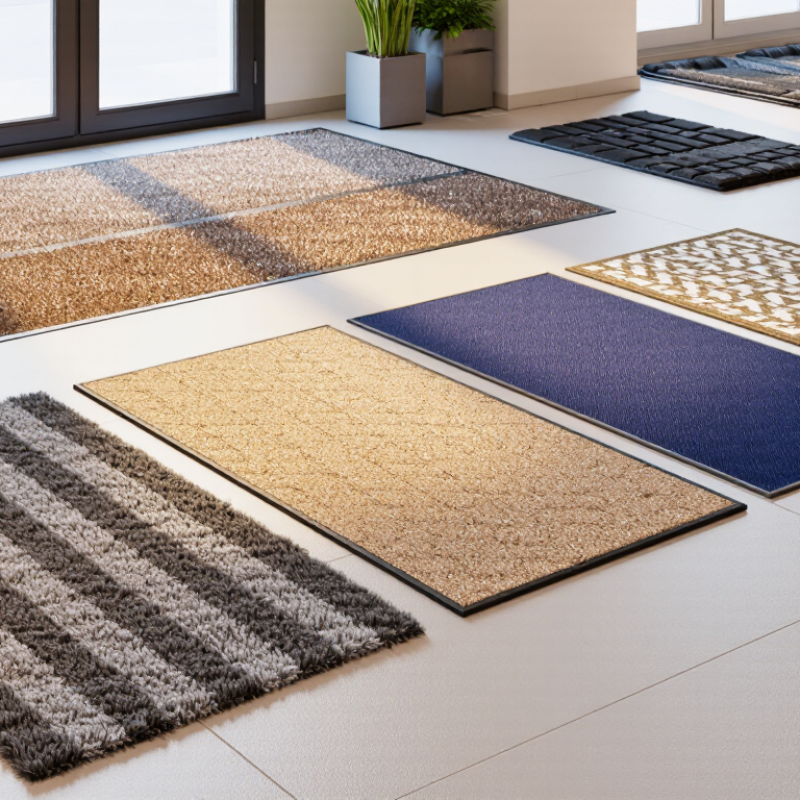
The main floor mat carpet types available in 2026 include cut-pile, loop-pile, coir, and carpet-topped rubber mats. Cut-pile mats feel soft underfoot and suit bedrooms or low-traffic entries. Loop-pile surfaces trap grit well, though snags can be a drawback around pets. Nylon generally handles wear better; polyester often feels softer, while polypropylene is usually budget-friendly. Coir’s coarse fibers scrape mud from shoes, but the mat can shed and dislikes prolonged dampness. Rubber-backed carpet mats add grip on hard floors.

Material choice affects waste, too. The U.S. Environmental Protection Agency’s Advancing Sustainable Materials Management report estimated that 3.4 million tons of carpet and rugs entered the U.S. waste stream in 2018; about 510,000 tons were recycled. Those figures are not a comparison of mat types, but they underline why lifespan and disposal options matter. A mat that survives repeated vacuuming may be more practical than a plush option that flattens quickly. No single type wins everywhere.

Tips: Check the backing against your floor finish, and measure the doorway clearance before buying. For wet entries, choose a washable surface and let the backing dry fully. Small detail. Check care labels, too.

Materials and Construction Used in Floor Mat Carpets

What Are the Top Floor Mat Carpet Types in 2026?

Floor mat carpets differ in both fiber and construction. Nylon fibers resist wear and spring back well after frequent foot traffic, making them useful near busy entrances. Polyester often offers vivid color and a softer feel, though heavy pressure can flatten its pile. Polypropylene handles moisture reasonably well and is easy to clean, but it may not feel as plush. Natural coir, made from coconut husk fibers, scrapes grit from shoes effectively. It can shed, especially when new. Small details matter.

Construction changes how each mat performs. Tufted carpet uses loops or cut fibers anchored into a backing; dense, low pile tends to trap less dirt than deep pile. Needle-punched mats bind fibers through repeated mechanical needling, creating a firm surface suited to practical entry areas. Woven mats interlace yarns, often giving them a flatter profile. Molded rubber or thermoplastic backings can help limit movement, but compatibility with the floor matters. Some backings may discolor or mark sensitive surfaces.

A mat’s best material depends on where it sits, how often it gets wet, and how it will be cleaned. For example, a coarse coir face may catch grit at a sheltered doorway, while a synthetic, quick-drying pile may be more practical near a damp threshold. There is no universal winner. Even a well-made mat can curl if its backing is unsuitable or its edges stay damp. Check the construction, backing, and care instructions together.

Best Uses for Different Floor Mat Carpet Types

Loop-pile carpet mats suit office entrances and corridors, where shoes bring in grit but carts still need to roll smoothly. For outdoor thresholds, choose open-grid rubber mats that shed rain and scrape off coarse debris; they are easier to rinse than absorbent carpet. A recessed mat well can reduce curled edges, though only when its dimensions match the mat.


For lobbies and indoor vestibules, dense nylon carpet mats trap fine dust and moisture before they reach polished floors. The Carpet and Rug Institute’s Green Label Plus program sets a 0.5 mg/m²·h total volatile organic compound emission limit for carpet, useful when indoor air quality matters. Check the product’s test documentation, not just its material label. Small detail. A low-profile, beveled edge also helps prevent trips.


In kitchens, workshops, or standing work areas, use drainage-backed rubber mats rather than plush carpet; water and grease can remain hidden in deep fibers. The U.S. Environmental Protection Agency’s mold guidance recommends drying wet materials within 24–48 hours. That timing matters for absorbent mats, especially after a leak or heavy rain. I still find that one mat rarely handles every doorway well: traffic, weather, and cleaning routines change the best choice. A mat that stays damp is the wrong mat.

How to Compare Floor Mat Carpets for Your Space

What Are the Top Floor Mat Carpet Types in 2026? How to Compare Floor Mat Carpets for Your Space

Choose by conditions, not appearance alone. Coir mats scrape grit from busy entryways, but shed fibers and dislike prolonged dampness. Nylon carpet mats suit heavier indoor traffic and are easier to vacuum. Microfiber absorbs water near sinks or patios, though it needs frequent washing. Rubber-backed styles resist slipping on smooth floors, but can trap moisture on some surfaces. Check the backing’s care instructions.

Measure the doorway and the area where people actually step. A thick pile can catch a door; a thin mat may bunch underfoot. EPA Indoor Air Quality guidance reports that concentrations of some indoor pollutants are often two to five times outdoor levels. That makes low-emission materials worth checking, especially in small rooms. The Carpet and Rug Institute’s Green Label Plus program tests emissions from carpet and related products. Still, a certification does not replace ventilation or regular cleaning. I’d also recheck fit after placing furniture; that detail is easy to miss.

Tips: Match pile and backing to traffic, moisture, and floor type. Check dimensions, door clearance, cleaning needs, and emissions information before buying. A small test area can reveal slipping or color transfer.

What Are the Top Floor Mat Carpet Types in 2026? - How to Compare Floor Mat Carpets for Your Space

Floor Mat Carpet Type Typical Construction Best For Moisture and Dirt Performance Cleaning and Care Durability and Placement Main Trade-Off
Carpet Tiles Small modular carpet squares, commonly made with synthetic fibers and a backing layer. Home offices, playrooms, basements, and commercial spaces where individual sections may need replacement. Varies by fiber and backing; many versions handle everyday indoor dirt but are not intended to stop heavy water at an entrance. Vacuum regularly. Replace or clean individual tiles according to the manufacturer’s care instructions. Practical in high-use areas because a damaged tile can often be changed without replacing the whole floor. Seams may be visible, and an uneven or damp subfloor can affect installation and performance.
Broadloom Carpet Wide rolls of tufted or woven carpet installed wall to wall or cut and bound as a mat. Bedrooms, living areas, and large spaces where a continuous carpeted surface is preferred. Provides a soft surface but can retain moisture and soil; suitability depends on pile, fiber, backing, and location. Vacuum routinely; blot spills promptly and use appropriate periodic deep cleaning. Comfortable over a large area. Best suited to dry indoor spaces rather than exposed outdoor entrances. Wall-to-wall installation and replacement are less convenient than changing a small, separate mat.
Cut-Pile Area Rug Yarn loops are cut to create a soft, upright pile; often paired with a separate rug pad. Living rooms, bedrooms, and other spaces where softness and a decorative floor covering are priorities. Absorbs some dust and spills, but the pile can hold soil and may take longer to dry after wet cleaning. Vacuum using a setting suitable for the pile; rotate periodically and treat spills promptly. Comfortable underfoot in low- to moderate-traffic indoor areas. A suitable pad can help limit movement. High or plush pile may show footprints and can be harder to clean than a low-profile surface.
Low-Loop or Berber-Style Mat Uncut yarn loops form a compact, low-profile surface, often made from synthetic fiber or wool. Hallways, offices, and busy indoor areas where a flatter surface is easier to walk across. Low loops can make loose soil easier to remove, but the carpet itself is not necessarily waterproof. Vacuum regularly with a setting suited to looped carpet; avoid snagging loops with rotating brush rolls. Low profile is useful near doorways and in traffic lanes; performance depends on fiber and construction. Furniture legs and sharp objects can snag or pull loops.
Washable Flatweave Rug Flat woven construction with little or no pile; some smaller versions are machine washable when their care label allows it. Kitchens, dining areas, and households that want a relatively easy-to-clean, low-profile floor covering. Loose crumbs are often easy to remove, but a flatweave may not absorb much water or provide a barrier against it. Shake or vacuum regularly. Machine wash only when the care instructions permit; dry fully before reuse. Low profile works well under doors and furniture; a non-slip pad may be needed on smooth floors. Thin construction offers less cushioning, and some designs can shift without a properly fitted pad.
Coir Entrance Mat Coarse natural coconut-husk fibers, usually formed into a dense mat with a backing. Covered outdoor entryways and sheltered door areas where shoes need to be scraped before entering. Effective at loosening dry dirt from shoe soles; prolonged exposure to moisture can reduce suitability and slow drying. Shake or brush outdoors and allow the mat to dry. Follow care guidance for the specific backing. Useful as an initial scraping mat in a sheltered entrance, usually as part of a multi-mat entry system. Can shed fibers and is generally less suitable for persistently wet or uncovered locations.
Rubber-Backed Utility Mat Textile or carpet-like face bonded to a rubber or other slip-resistant backing. Entryways, laundry areas, garages, and other practical spaces, provided the mat is rated for the intended location. Some designs help catch tracked-in dirt and incidental moisture; resistance to standing water varies by construction. Shake, vacuum, or rinse only if the care instructions allow. Let the mat and floor beneath it dry. Backing can help reduce movement on suitable floors; check compatibility with the floor finish. Some backings may discolor or react with certain floor finishes, so confirm floor compatibility before use.

Comparison tip: Choose based on location, traffic, moisture exposure, pile height, cleaning needs, and floor compatibility. Construction and performance vary by product, so check the care label and installation instructions.