7 Tips for Buying the Best Vinyl Doors
A door can look sturdy in a showroom and still feel wrong once it meets your hallway, weather, and daily routine. Choosing vinyl doors is not just about color or price. Frame construction, glass options, hardware, and installation all affect how the door performs over time.
Small details matter. Check how smoothly the sample opens, whether the weatherstripping sits evenly, and how much daylight shows around the frame. If you are comparing patio doors, consider the available opening space and the path people use most often. For an exterior entry, look closely at the locking system, frame reinforcement, and the manufacturer’s published performance ratings. Ask what the warranty covers, and whether it includes labor or only replacement parts. Read the fine print.
This guide presents seven practical tips for evaluating vinyl doors without relying on showroom appearance alone. It will help you compare specifications, inspect quality, and ask useful questions before making a purchase. Measurements should be confirmed carefully, since even a small sizing error can complicate installation. A qualified installer can assess the opening and explain any preparation work, though quotes and recommendations may differ. No single door suits every home. The right choice depends on your climate, budget, design preferences, and how the space is used. Take your time. A thoughtful comparison can prevent avoidable frustration and help you choose a door that feels right long after installation.
Clarify Your Needs, Door Location, and Required Dimensions
Before comparing vinyl doors, decide what the door needs to do. A bedroom door may prioritize privacy, while a patio door may need to bring in daylight and allow frequent access. Think about who will use it, how much traffic it will handle, and whether noise or visibility matters. Small details matter. A sliding door saves swing space, but its track needs room and regular cleaning.
Door location affects the right specifications. An exterior opening faces weather and temperature changes, so check the door’s stated suitability for outdoor use and your local climate. For bathrooms or laundry areas, consider ventilation and nearby moisture. Check the floor, too: a thick rug or raised threshold can interfere with smooth operation. It is tempting to assume an old door’s size will fit a replacement. That assumption can be costly.
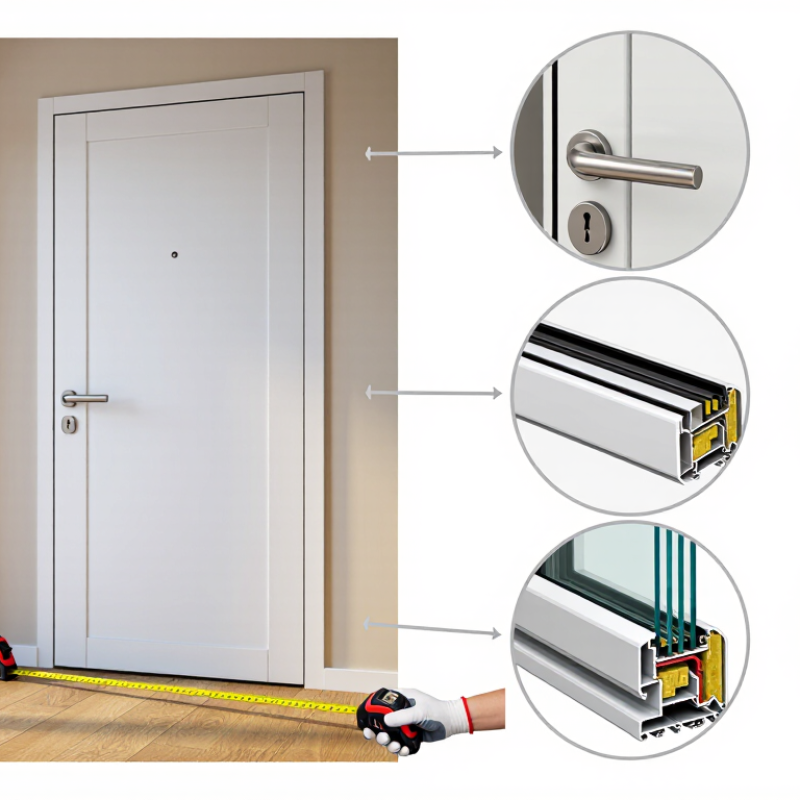
Measure the opening at several points, not just once. Record width at the top, middle, and bottom, then height at both sides and the center. Use the smallest measurements as a starting reference, but confirm how the manufacturer defines door size before ordering. Measure the frame depth as well, and note trim, hinges, handles, and the direction the door should open. Measure twice. Uneven walls are easy to miss, especially in older homes. If the opening is damaged or unusually shaped, pause and ask a qualified installer to check it before you buy.
Compare Vinyl Door Styles, Frames, and Panel Construction
Vinyl doors come in hinged, sliding, and French styles. Choose by how the doorway works in daily life. A sliding door saves floor space, while a hinged door needs room for its swing. Measure the opening, nearby furniture, and threshold height before comparing designs. Small details matter.
Frame construction affects stability and comfort. Look for welded corners, reinforced sections where hardware attaches, and continuous weatherstripping. Ask for the frame’s air-leakage and water-resistance ratings, not just its color or profile. The U.S. Department of Energy’s Energy Saver guidance estimates that heat gain and loss through windows account for 25–30% of residential heating and cooling energy use. That figure is not door-specific, but it underscores why glazed panels deserve careful comparison.
Panel options range from solid designs to half-lite and full-lite glazing. More glass brings in daylight, yet can reduce privacy and increase solar heat gain. Check the National Fenestration Rating Council label for tested U-factor and solar heat gain coefficient values. Lower U-factor generally means less heat transfer; the best balance depends on climate and orientation. A triple-pane panel may sound ideal, but it can add cost and weight without solving a poorly sealed frame. Inspect the corners and seals closely. They’re easy to overlook.
Evaluate Hardware, Installation Requirements, and Warranties
Hardware deserves a close look. Test the lock with the door open, then closed; a stiff latch may signal poor alignment. Check hinge material, screw length, and whether replacement parts remain available. For wide patio doors, ask whether the rollers and track can be adjusted without removing the panel. Small parts matter.
Installation can protect or undermine a good door. Confirm the rough opening is square, the sill is level, and flashing directs water outward. Follow the door maker’s written instructions, rather than relying on a generic rule. Easy to miss.
For glazed vinyl doors, compare the NFRC label’s whole-product U-factor and solar heat gain coefficient. The U.S. Department of Energy estimates that heat gain and loss through windows account for 25–30% of residential heating and cooling energy use. That figure is not door-specific, but it underscores why careful perimeter sealing matters.
Read warranty exclusions before purchase. Check coverage periods for the frame, insulated glass, hardware, and finish separately. Ask whether labor is included and whether coverage depends on certified installation or routine maintenance. Keep the invoice and installation record. I would still verify the exact wording; sales pages can leave important limits unclear.
Compare Quotes and Choose a Door That Fits Your Budget
When comparing quotes for a vinyl door, match the details before comparing totals. Ask each installer to list the door size, glass type, frame, hardware, removal, disposal, trim work, and labor. A low price may leave out fitting or finishing costs. Check whether the quote includes a written warranty and what it covers. Small omissions add up.
Tip: Use a simple comparison sheet. Record the total price, installation date, payment schedule, and any exclusions. The 2024 Cost vs. Value report from Zonda puts the U.S. average cost of a steel entry-door replacement at $2,355, with an estimated $2,000 in resale value. That is a useful remodeling benchmark, not a vinyl-door price. Local labor, door dimensions, and upgrades can shift your actual quote considerably.
Choose a door that fits both your budget and the opening. A basic design may leave room for better locks or insulated glass, while decorative glass can raise the cost quickly. Ask for an itemized price with and without upgrades. Then compare the total installed cost, not just the door itself. I’d still leave a little room in the budget for unexpected trim repairs; it is easy to overlook them.