





A Foam-Filled Mooring Buoy must do more than float. It needs to support the specified mooring loads, resist abrasion, and remain dependable through repeated exposure to waves, sunlight, and salt water. For buyers, the details matter: buoyancy, foam type, shell thickness, fittings, and documented test results. A polished product photo cannot verify them.
The scale of maritime activity makes reliable equipment important. UNCTAD’s Review of Maritime Transport 2024 reports that seaborne trade grew by 2.4% in 2023, reaching 12.3 billion tonnes. That figure describes shipping, not buoy demand, so it should not be used to imply market size. Buyers comparing China’s manufacturers should look for project records, traceable materials, quality-control documentation, and clear load ratings. Ask how the buoy performs after a cut or puncture. Ask for evidence, not only assurances. Small questions matter.
A named expert quotation needs a verifiable source. None was supplied for this topic, so assigning a quotation to an individual would risk misleading readers. This guide instead focuses on evidence buyers can check when assessing a China-based Foam-Filled Mooring Buoy manufacturer: manufacturing experience, technical specifications, inspection practices, and after-sales support. There is no perfect supplier. Diligent verification still narrows the risk.
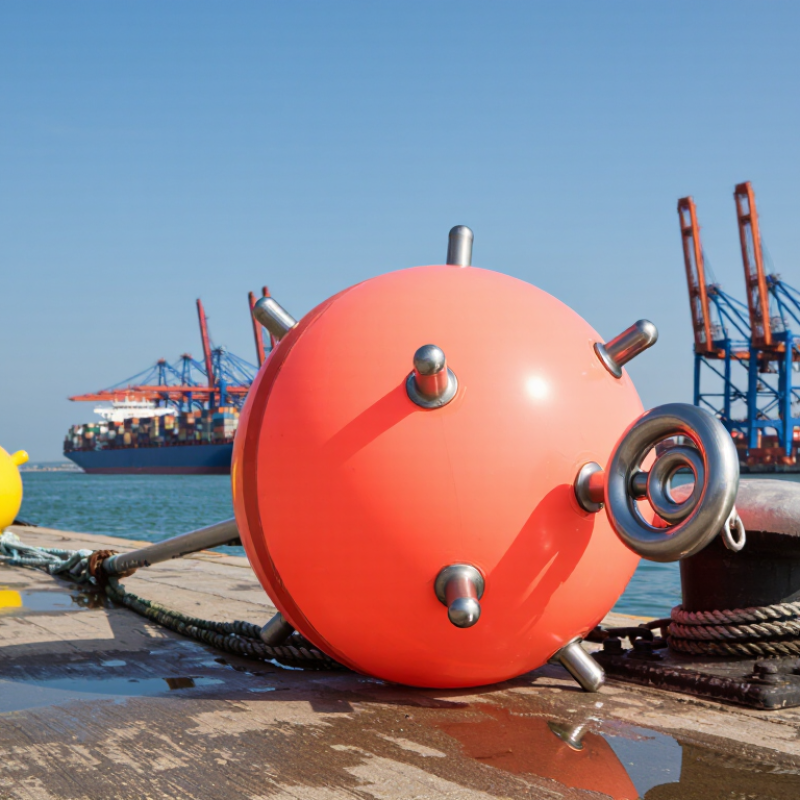
A foam-filled mooring buoy is a floating marker or attachment point with buoyant foam inside its outer shell. Unlike an air-filled buoy, it does not rely on a sealed hollow chamber to stay afloat. Many designs use closed-cell foam, which limits water absorption, beneath a tough protective skin. The exact materials and shape vary by intended load and water conditions.
No air chamber to inflate.
The foam core helps the buoy retain buoyancy if its skin is punctured, but damage still matters. Water can enter through cuts, and repeated compression may affect performance over time.
Check the shell for cracks, worn patches, and deep gouges. Inspect the lifting eyes, shackles, and connecting lines too; these parts transfer forces from waves and vessels.
A bright, clean surface can be reassuring, but it is not proof of sound construction. Match buoy size and rated capacity to the mooring arrangement, then follow the maker’s inspection guidance.
I would not judge a buoy by appearance alone. That is an easy mistake.
Foam-filled mooring buoys are designed around the loads they must carry, not just their visible size. Engineers define the working depth, mooring-line tension, wave exposure, and handling loads before choosing the buoy’s diameter and foam volume. DNV-RP-C205 provides methods for assessing environmental loads, while ISO 19901-7 covers stationkeeping systems. Both help frame the design conditions; neither replaces project-specific calculations.
A useful check is displaced-water volume. In seawater with an assumed density of 1,025 kg/m³, each cubic metre displaces roughly 1.03 tonnes of water. That is gross buoyancy, not usable capacity: the buoy’s own mass and required reserve must also be considered. Designers then select a shell and closed-cell foam core suited to impact, abrasion, and long-term immersion. Small details matter. A poorly sealed fitting can admit water and reduce performance.
During manufacture, the shell is prepared, foam is molded or injected, and joints and lifting points are inspected. Typical quality checks include verifying dimensions, checking for voids, and conducting buoyancy or load tests against the approved design. A test result can look clean while hiding weak documentation, so traceable material and inspection records matter too. The process is not perfect; foam distribution can be difficult to assess without suitable inspection methods.
Foam-filled mooring buoys are designed for a specific mooring system and operating environment. The specifications below describe common design principles; final dimensions, materials, and load ratings must be confirmed through project engineering and testing.
| Design or Production Dimension | Typical Data or Method | Purpose and Practical Considerations |
|---|---|---|
| Required buoyancy | Calculated from the buoy’s displacement, the mass of the buoy and attached equipment, and the supported portion of the mooring system. | Buoyancy must be sufficient for the intended load while retaining an engineered reserve. The required reserve depends on the application and design criteria. |
| Displacement calculation | For a floating body, buoyant force is based on the mass of the displaced water. Seawater density is commonly taken as approximately 1,025 kg/m³ for preliminary calculations; actual density varies with salinity and temperature. | The calculation helps determine the submerged volume and expected draft. It is not a substitute for a complete stability and mooring analysis. |
| Buoy dimensions and shape | Diameter, height, profile, draft, and freeboard are selected to meet buoyancy, stability, visibility, handling, and site requirements. There is no single standard size for all mooring buoys. | Design inputs include water depth, wave and current conditions, mooring loads, installation method, and any navigation or access requirements. |
| Outer shell | Common construction options include rotationally molded, UV-stabilized polyethylene shells and fabricated steel shells. The appropriate material depends on service conditions and the design. | The shell protects the buoy core from impact, abrasion, sunlight, and water ingress. Shell thickness and reinforcement should be specified for the expected loads and handling. |
| Foam core | Closed-cell polymer foam is selected according to required buoyancy, water-absorption performance, compatibility with the shell, and service temperature. | Closed cells limit water uptake if the shell is damaged. Foam type and density should be documented and verified against the design specification. |
| Load-bearing hardware | Central rods, plates, eyes, or other load-transfer components are sized for the specified mooring loads and connected to the buoy structure. | Hardware and its attachment points carry concentrated forces. The design should account for fatigue, corrosion, and the direction of applied loads. |
| Corrosion protection | Metal components may use suitable corrosion-resistant alloys, coatings, or galvanizing, selected for the water and exposure conditions. | Material selection should consider seawater exposure, dissimilar-metal contact, maintenance access, and the expected service life. |
| Shell forming | For a molded polyethylene design, the shell is formed in a mold using a controlled heating and cooling process. Fabricated designs use their specified cutting, forming, joining, and coating procedures. | Process controls help achieve consistent geometry, wall thickness, and finished surfaces. The production route depends on the chosen shell material. |
| Foam installation | The specified foam core is placed, fitted, or introduced using the method appropriate to the buoy design. Seams and openings are closed according to the product construction. | Correct fit and sealing help reduce voids and limit water entry. Inspection should confirm that the core and shell are assembled as specified. |
| Assembly and finishing | Load-bearing hardware, protective fittings, identification markings, and any specified reflective or visibility features are installed. | Fittings must not obstruct inspection or interfere with the mooring arrangement. Markings and colors should follow applicable project or navigation requirements. |
| Quality checks | Checks may include dimensional inspection, visual examination, hardware and attachment inspection, buoyancy or flotation checks, and review of material and production records. | Acceptance criteria should be defined in the purchase specification. Load testing, when required, should follow an agreed procedure and documented test limits. |
| Final mooring-system verification | Buoy capacity and connections are reviewed together with the chain or rope, anchors, water depth, and environmental loads. | A buoy’s rating alone does not establish the capacity of the complete mooring system. System-level engineering is needed for safe deployment. |
A foam-filled mooring buoy is only as dependable as its materials and construction. A closed-cell polyethylene foam core can limit water absorption if the outer shell is damaged. The core should fit tightly, without large gaps that could shift under repeated wave action. A tough polyurethane elastomer coating helps resist abrasion, saltwater, and sunlight. It still needs inspection.
A tidy finish can mislead. Check the mooring eyes, lifting points, and attachment areas for solid reinforcement and even workmanship. Metal fittings should resist corrosion, and their rated capacity should suit the expected load. Ask for buoyancy and load-test documentation, not just a product description. Clear records make comparisons more reliable.
Safety also depends on visibility and condition. Bright, durable colors help crews spot a buoy in chop or low light; reflective panels can improve visibility at night. Look for secure fittings, no exposed foam, and no deep cuts or loose coating. No coating is invincible, a fact that is easy to forget when equipment looks new. Set inspection intervals around actual exposure, and record repairs. Even a well-made buoy can become unsafe if damage goes unnoticed.
Foam-filled mooring buoys are used wherever vessels or floating equipment need a visible, dependable attachment point. In marinas, they hold lines for boats that cannot or should not remain alongside a dock. A buoy may sit in a sheltered basin, with a short line leading to a seabed anchor. The right size depends on the vessel, line arrangement, and local conditions.
Commercial ports use them for workboats, service craft, and temporary berthing. Aquaculture sites may use buoy systems to support mooring lines around floating cages and walkways. Offshore construction and renewable-energy projects can also use them to mark or support mooring points. Conditions vary. Current, waves, vessel movement, and seabed type all affect the setup.
A foam-filled design keeps its buoyancy if the outer shell is damaged, but it still needs suitable inspection and maintenance. Check the lifting points, attachment hardware, and surface for wear or impact damage. A buoy can look oversized and still be poorly matched to the load. That detail is easy to miss. Site-specific calculations and advice from a qualified marine professional help determine buoyancy, line loads, and anchor requirements.
Assessing a foam-filled mooring buoy manufacturer in China starts with the design, not the brochure. Ask how the buoy’s diameter, freeboard, and buoyancy are matched to your vessel and site conditions. A dependable engineering team should explain its assumptions and provide drawings for review. It should also identify the foam type, outer-shell material, wall thickness, and how the lifting points are attached.
Small details matter. Request production records for foam filling, shell fabrication, and buoyancy checks. Ask whether finished units are inspected for leaks, surface damage, and dimensional variation. Test reports are useful, but confirm that they describe the same model and configuration you plan to order. Clear traceability helps connect inspection results to individual production batches.
Factory experience is worth checking through project references and, where practical, a site visit. Look closely at stored materials, workshop cleanliness, and how staff handle inspection equipment. Paperwork can look excellent while actual quality varies. That is easy to miss. Discuss expected service life, repair methods, spare parts, and delivery packaging before comparing quotations. A low price alone says little about performance in salt water, wave action, or repeated line loading. A careful assessment may take longer than expected, and no checklist removes every uncertainty.
A practical procurement checklist: the bars show how many evidence items to verify in each area, not supplier scores or market rankings.
Review material traceability, production quality records, buoyancy and stability data, mooring hardware specifications, test documentation, and after-sales support. Checklist counts describe this assessment framework only; verify each item against the manufacturer’s actual records and your project requirements.


